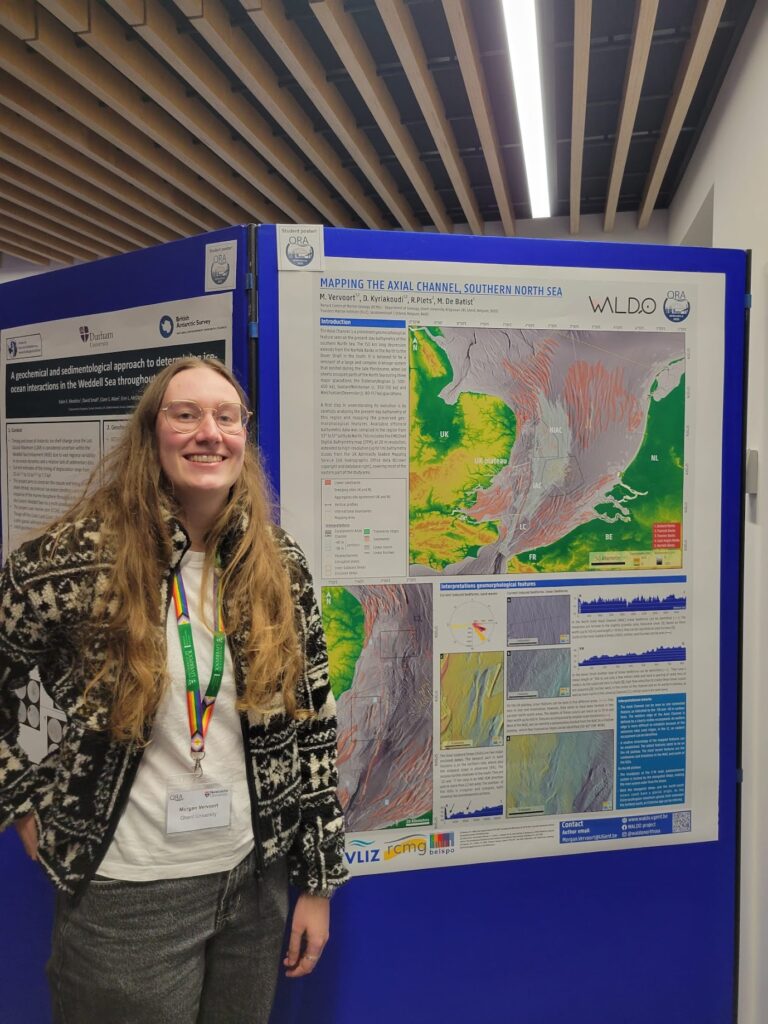
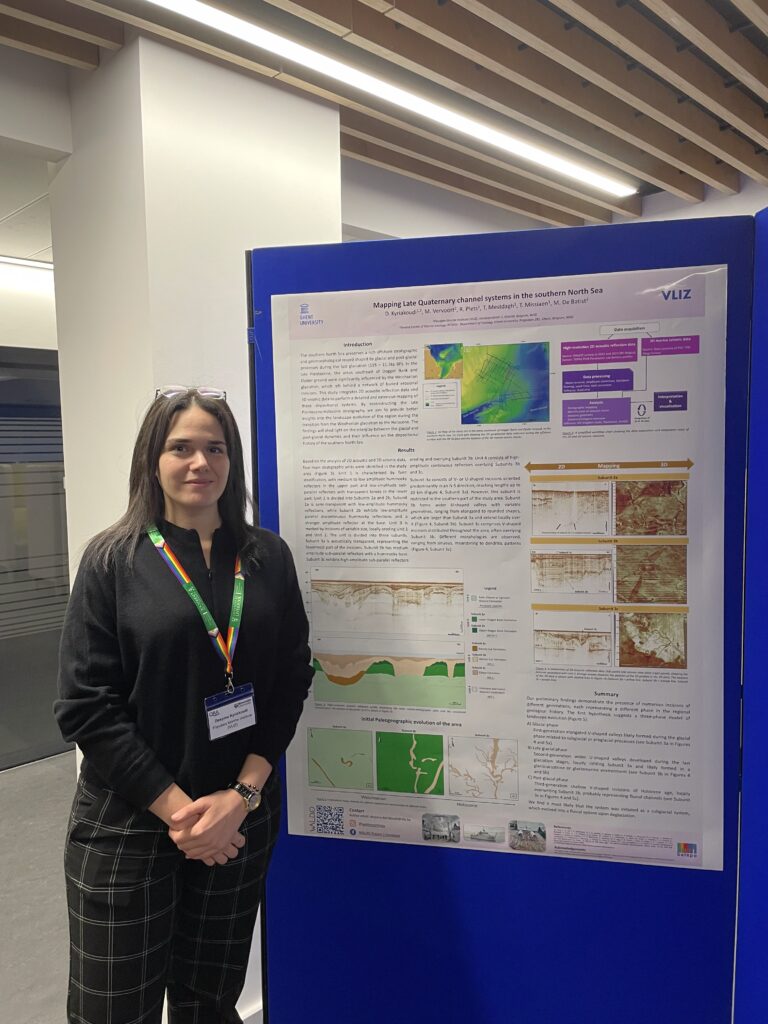
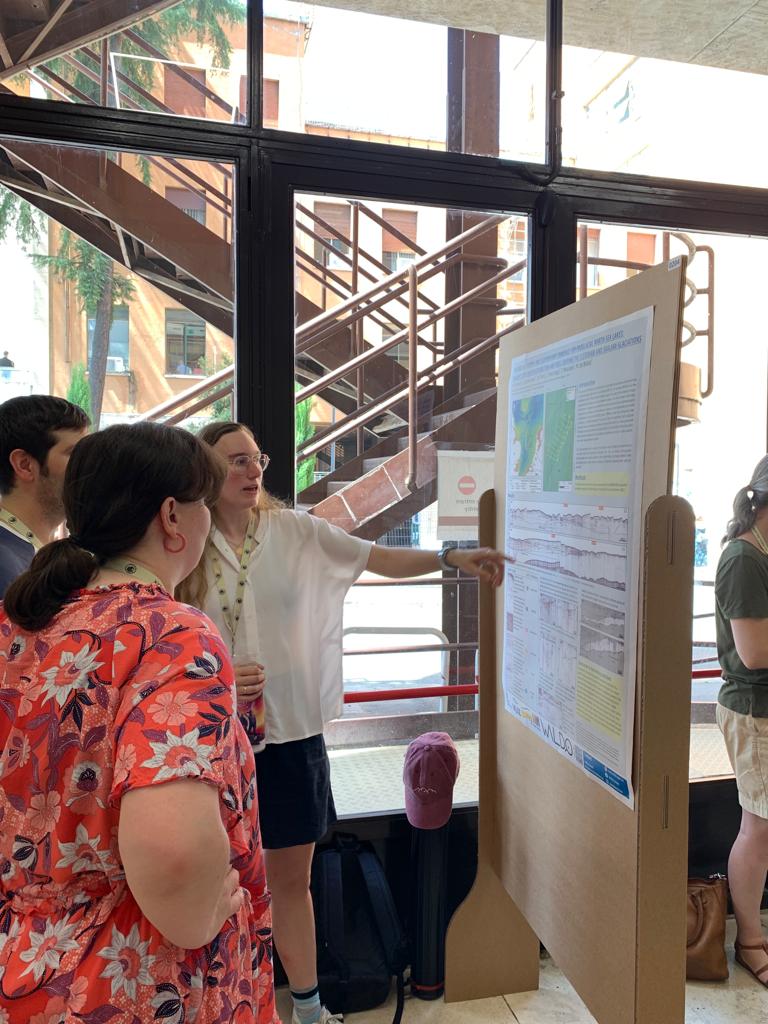
The latest paper from the WALDO project is now published! In this study, we present evidence for a late MIS 3 proglacial lake south of Dogger Bank, providing new insights into the Weichselian glacial history and palaeolandscape evolution of the southern North Sea.
You can read the paper, published in Quaternary Science Reviews, here: Evidence of a Weichselian MIS 3 proglacial lake south of Dogger Bank (southern North Sea) – ScienceDirect
Abstract
Offshore evidence for Weichselian glacial influence in the southern North Sea prior to the Last Glacial Maximum (LGM) remains sparse and discontinuously preserved, limiting reconstructions of ice extent and timing. Here, we present a detailed reconstruction of a previously unrecognised buried glaciolacustrine basin south of Dogger Bank, providing new insights into pre-LGM Weichselian glaciation. Integrated analysis of high-resolution 2D sub-bottom profiler data and sediment cores reveals a basin-like depocenter, covering a surface of ∼69 km2 and infilled by massive, fine-grained lacustrine sediments containing abundant ice-rafted debris, interpreted as dropstones. These deposits indicate sustained ice influence and sedimentation in an ice-proximal lake setting. Detailed, multi-method core analyses tightly constrain sediment accumulation to late Marine Isotope Stage (MIS) 3 (ca. 32-30 ka), yielding a high-resolution, directly dated offshore record of glacial influence in the southern North Sea before the LGM. The glaciolacustrine succession is locally overlain by glaciofluvial outwash deposits associated with LGM ice retreat (ca. 18 ka), while elsewhere it is truncated by younger Holocene incised channels and marine sediments. These findings support reconstructions placing a late MIS 3 ice margin in the study area and reveal a complex buried glaciated landscape of small, ice-proximal basins and ponds in the southern North Sea.